

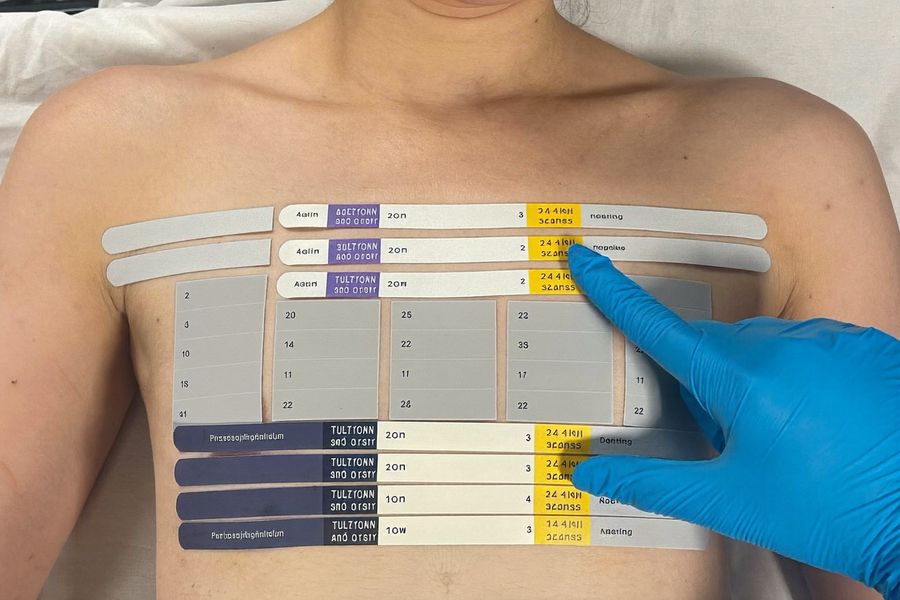
Allergy & Patch Testing
Patch testing identifies the allergens driving contact eczema. A panel of 40-plus allergens is applied to the back, read over several days, and turned into an avoidance list.
Clinic and treatment images
Tap to enlargeHow it is applied
A panel of more than 40 allergens is taped onto the skin of the upper back.
Patches stay for 48 hours; readings span several days to catch delayed reactions.
Positive reactions are recorded and linked to daily products or workplace exposure.
Results guide a personalised avoidance list and safer product recommendations.
Who it suits
- Adults with recurrent or stubborn eczema of the hands, face or eyelids.
- People suspected of contact allergy to cosmetics, occupational agents or jewellery.
- Patients whose trigger is unclear and whose eczema persists despite treatment.
Steroids and phototherapy must be avoided on the test area beforehand, and results become clear only after several days of readings.
Why Clinovia?
Psoriasis and eczema are not only a surface problem. We assess the skin barrier, inflammation, nutrition and lifestyle, comorbidities and dermatological treatment together. Evidence-based dermatology remains the backbone; nutrition and lifestyle support that plan.
The Gut–Skin Relationship
We review digestive symptoms, dietary pattern and food-sensitivity history. The link between gut microbiome and inflammatory skin disease is still being researched, so it is addressed alongside — never instead of — dermatological treatment.
Cortisone-Free Protocol
First-line calcineurin and PDE-4 inhibitors, ceramide-based barrier repair and phototherapy instead of steroids; systemic and biologic steps when needed.
Systemic Repair
Vitamin D, zinc, omega-3 and iron levels plus thyroid and insulin resistance are screened, and any deficits found are built into the plan.
Measurable Follow-up
PASI/EASI and DLQI scores are tracked alongside laboratory values; steps that do not deliver a response are removed from the plan.
Our standard protocols are cortisone-free. We work with topical calcineurin inhibitors, PDE-4 inhibitors, ceramide-based barrier repair, NB-UVB phototherapy and biologic agents when needed. Cortisone is considered only for very short, unavoidable situations and with the patient's consent.
NB-UVB is safe when cumulative dose is monitored. A typical course is 20–30 sessions at two to three per week; the first response usually appears within 4–6 weeks.
Patients with moderate-to-severe psoriasis or severe atopic dermatitis who did not respond adequately to phototherapy and systemic therapy. Eligibility is confirmed after screening tests.
All treatments
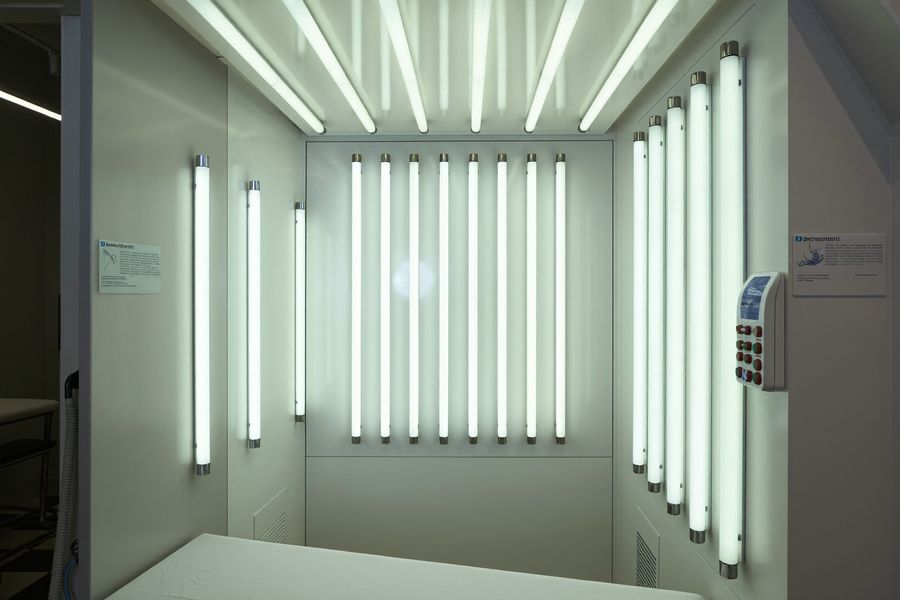 NB-UVB PhototherapyNarrowband UVB at 311 nm calms inflammation in psoriasis and eczema without cortisone. Sessions run two to three times a week, with a typical course of 20–30 and PASI/EASI tracking.
Learn more
NB-UVB PhototherapyNarrowband UVB at 311 nm calms inflammation in psoriasis and eczema without cortisone. Sessions run two to three times a week, with a typical course of 20–30 and PASI/EASI tracking.
Learn more
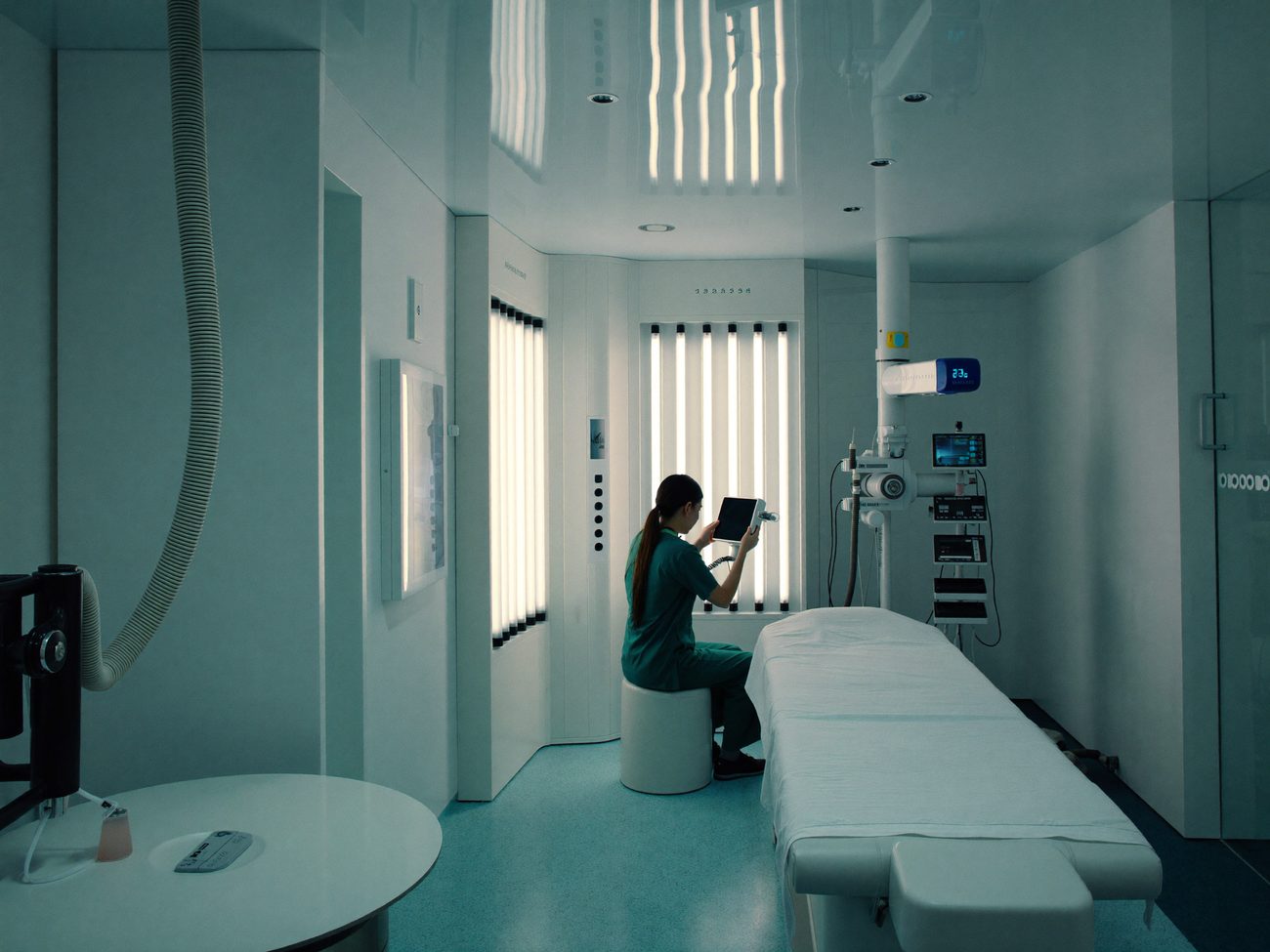 PUVA & Targeted PhototherapyPUVA and targeted local units treat stubborn sites such as hands, feet and scalp with cortisone-free light. Dose and response are monitored throughout the course.
Learn more
PUVA & Targeted PhototherapyPUVA and targeted local units treat stubborn sites such as hands, feet and scalp with cortisone-free light. Dose and response are monitored throughout the course.
Learn more
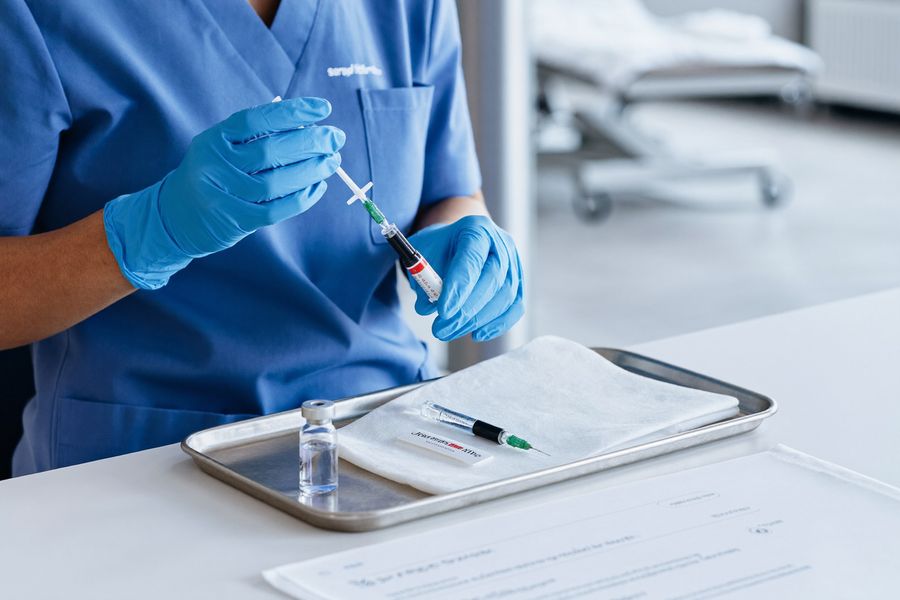 Biologic TreatmentsBiologic drugs selectively block targets such as IL-17 and IL-23 in psoriasis and IL-4/13 in eczema. They are considered in moderate-to-severe, resistant disease after screening.
Learn more
Biologic TreatmentsBiologic drugs selectively block targets such as IL-17 and IL-23 in psoriasis and IL-4/13 in eczema. They are considered in moderate-to-severe, resistant disease after screening.
Learn more
Let's build the right plan for your skin today
Fill in the form and our coordinator will call you the same day to arrange the right doctor and time slot.
- Same-day callback
- Consultation in five languages
- Written treatment plan
- Defterdar, Fethi Çelebi Cd. No:15, 34050 Eyüpsultan/İstanbul, Türkiye
- Mon–Sat: 09:00 – 19:00